An antenna distributor is not a universal signal booster. Correct performance depends on compatible frequency bands, diversity paths, antennas, cable losses, gain structure, DC power and physical installation.
Map the complete RF architecture
List every wireless microphone receiver and IEM transmitter, its tuning band, antenna inputs or outputs, connector type and rack position. Separate receiving antenna distribution from IEM transmitting antenna combining.
Calculate the number of diversity paths and outputs actually required. Include spare capacity, antenna locations, cable routes, cable types, splitters, boosters, power supplies and grounding.
Current wholesale antenna-system shortlist
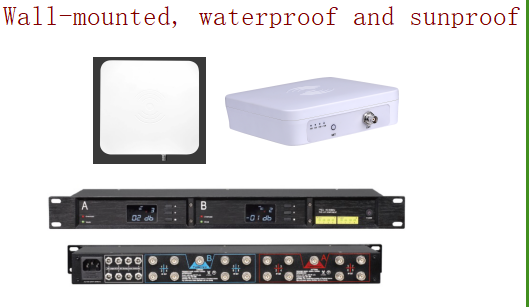
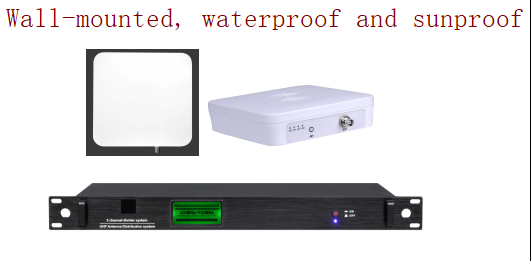
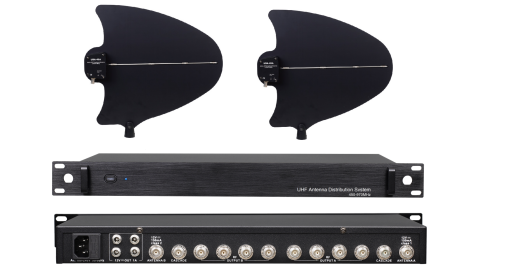
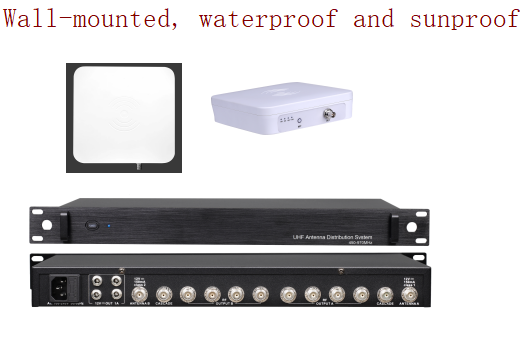
SM-3G is the documented active directional antenna and distribution option. The eight combinations below are current receiver-side or IEM-side product configurations with exact model-labelled supplier images. Receiver distribution and IEM transmit combining are different RF architectures and must not be interchanged.
Confirm exact frequency bands, included antennas, output counts, gain, DC power, connector type, cable plan and compatible equipment on the current order specification.
| Model | Purchasing role | Buyer should verify | Product evidence |
|---|---|---|---|
| UA80+A3000 | 16-channel receiver-rack antenna system | Confirm RF band, connectors, included antennas, output count, gain, DC power, cables and current production version. | View product |
| A760+A3000 | 10-channel receiver antenna system | Confirm RF band, connectors, included antennas, output count, gain, DC power, cables and current production version. | View product |
| A730+U49 | 10-channel directional-antenna distribution system | Confirm RF band, connectors, included antennas, output count, gain, DC power, cables and current production version. | View product |
| A730+A3000 | 10-channel panel-antenna distribution system | Confirm RF band, connectors, included antennas, output count, gain, DC power, cables and current production version. | View product |
| UA895+U85 | 10-channel receiver antenna distribution system | Confirm RF band, connectors, included antennas, output count, gain, DC power, cables and current production version. | View product |
| UA844+U84 | 10-channel diversity antenna distribution system | Confirm RF band, connectors, included antennas, output count, gain, DC power, cables and current production version. | View product |
| AC10+A2003 | 4-channel wireless IEM antenna system | Confirm RF band, connectors, included antennas, output count, gain, DC power, cables and current production version. | View product |
| AC3+A2003 | 4-channel IEM antenna combiner system | Confirm RF band, connectors, included antennas, output count, gain, DC power, cables and current production version. | View product |
Model-labelled supplier image comparison
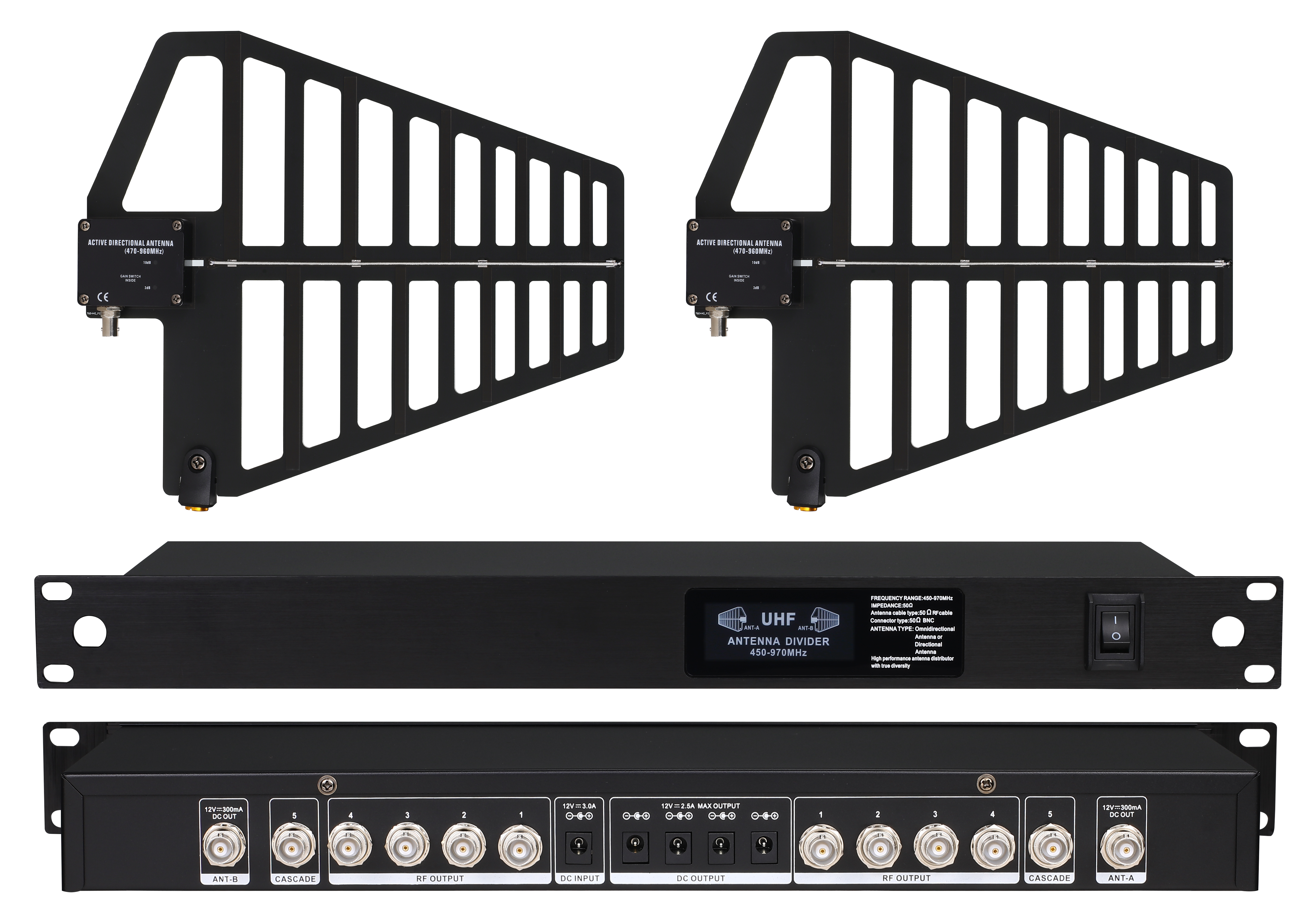
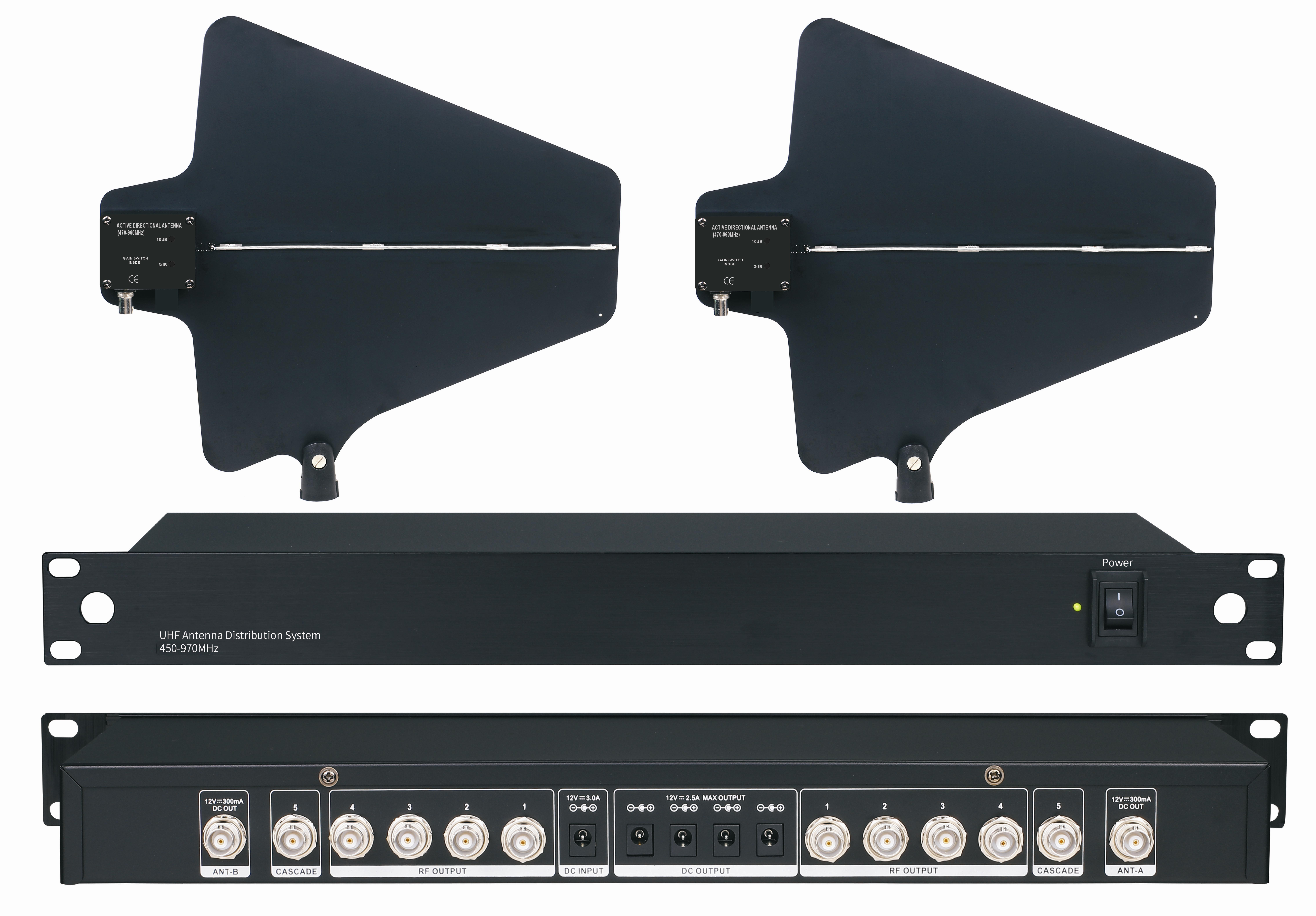
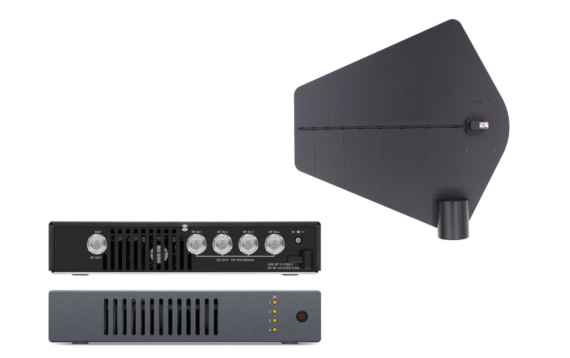
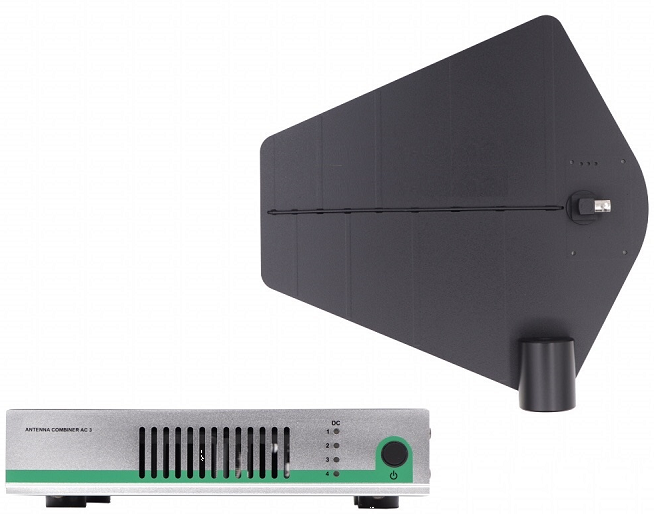
Calculate cable loss before adding gain
Long coaxial cables and high frequencies increase signal loss. Document each cable length and type, connector loss and passive split. Use amplification only to compensate a known loss within the system’s safe operating range.
Too much gain can overload receiver inputs and reduce performance. Antenna placement, line of sight, polarization, spacing and isolation between transmit and receive antennas remain critical.
Test the complete project rack
Connect the intended receivers, transmitters, antennas and real cable lengths. Verify every output and diversity path, DC power, gain settings, indicators, RF level, interference behavior and operation with the expected number of channels.
Walk the real venue, test body blocking and stage equipment, then interrupt and restore power. Record the approved frequencies, cable map, antenna positions, firmware and equipment versions.
Approve the complete wholesale package
Confirm rack units, power supply and plug, antenna types, coaxial cables, adapters, terminators, mounting hardware, manuals, spare parts, MOQ, lead time, packaging and warranty. Require version control for repeat orders.
Review UA80+A3000, SM-3G, UA80+A2001, A760+U8800 or AC10+A2003. Read the complete antenna distribution guide and the wireless microphone RF guide.
Frequently asked questions
Antenna system wholesale FAQ
How should a buyer choose an antenna system?
Confirm RF band, receiver and transmitter architecture, channel count, antennas, cables, loss, gain and DC power compatibility.
Can one distributor work with any receiver?
No. Frequency, connectors, impedance, power, gain and output architecture must match the exact system.
What should be tested before ordering?
Test the complete rack, every diversity path, real cable lengths, antennas, gain, interference, venue coverage and power recovery.